
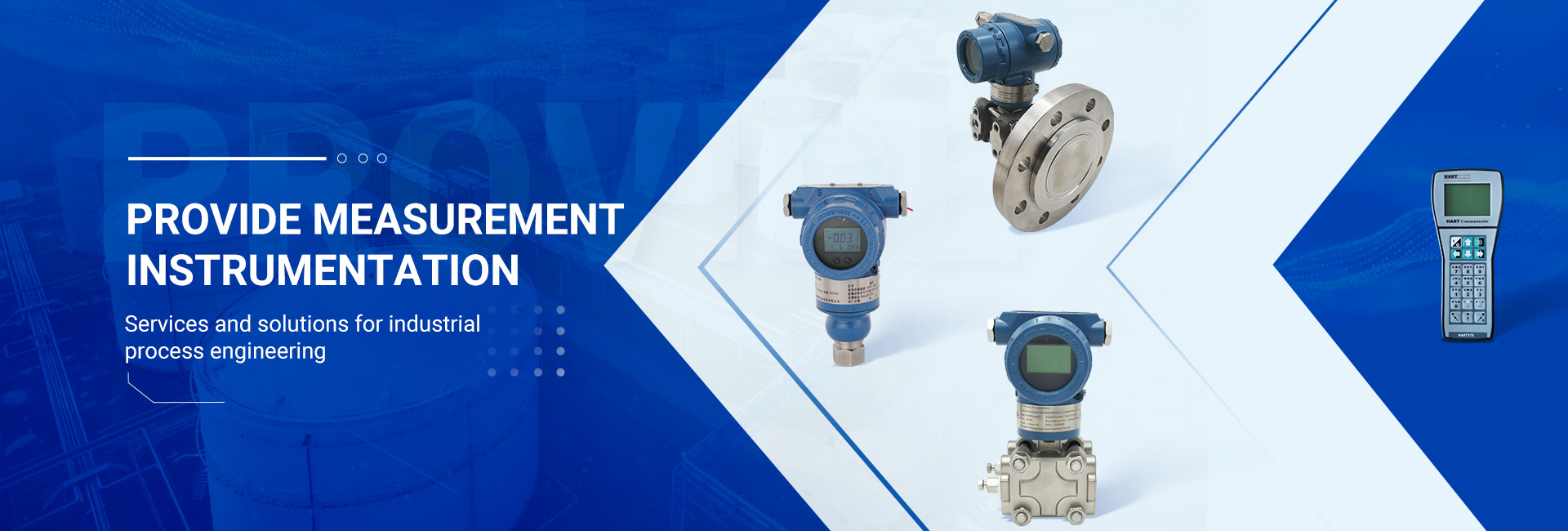
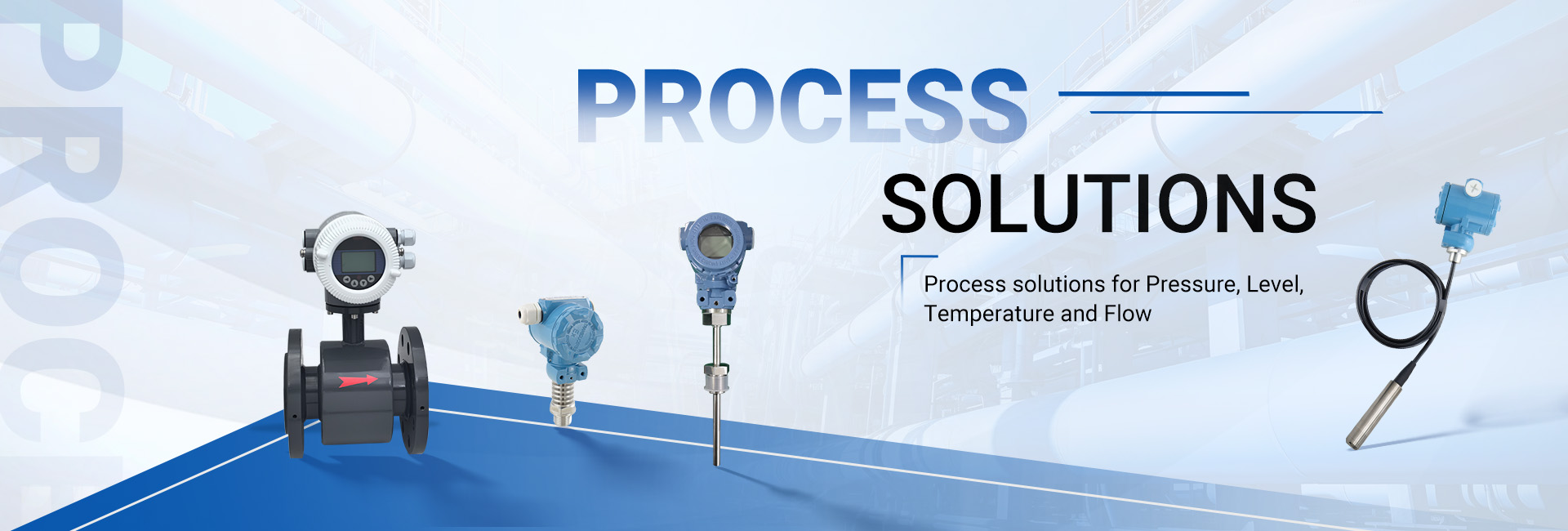

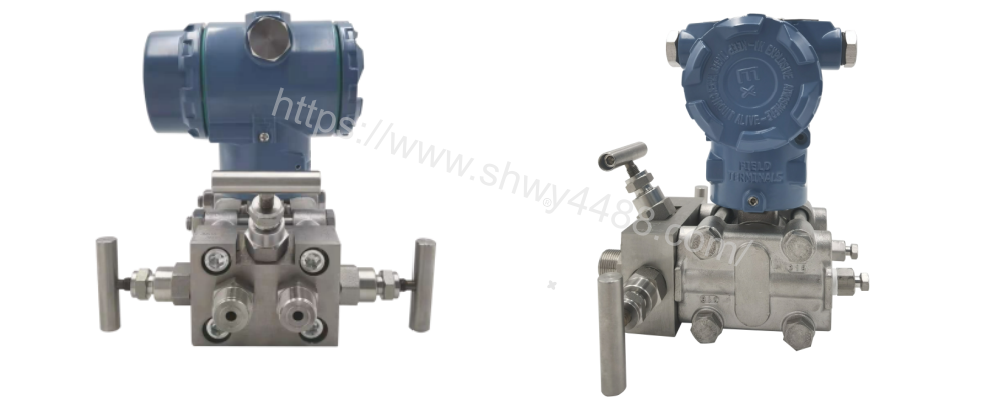
In industrial process measurement, differential pressure transmitters are responsible for detecting critical parameters such as pressure difference, liquid level and flow. A DP transmitter measures the pressure difference between two points and its sensing element (the diaphragm capsule) is delicate. Improper installation or operation—for instance, suddenly introducing excessive pressure to single side—can damage or even permanently destroy the transmitter. As a precision instrument used for metering and production control, its safe and accurate operation depends to a great extent on the associated valve manifold.
A differential pressure transmitter needs a valve manifold mainly for the following reasons:
Protection requirement: DP transmitter measures pressure difference between its high- and low-pressure chambers. If the valves on the two sides are operated out of sequence during commissioning, shutdown or maintenance, the transmitter can be subjected to the full process static pressure on one side only, potentially damaging the delicate diaphragm. The equalizing valve in the manifold provides a passage to balance the pressure on both sides before operation as an essential design that prevents mechanical damage.
Calibration requirement: Every measuring instrument experiences zero drift. A DP transmitter requires its output signal to be checked and adjusted to the theoretical zero point when the differential pressure is zero. By closing the H and L block valves and opening the equalizing valve, a true zero-differential-pressure condition can be created without interrupting the process, allowing online zero calibration for ensuring long-term measurement accuracy.
Maintenance requirement: Impulse lines can accumulate gas, condensate or dirt, causing signal distortion or blockage. Dedicated valves are therefore needed for venting, draining (blowdown) and flushing.
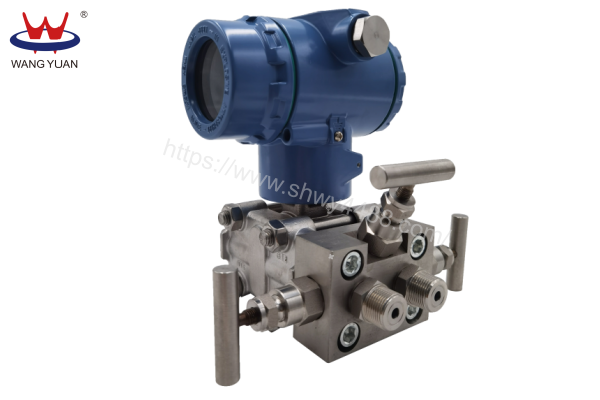
3-valve is the most commonly used manifold for DP transmitter. It consists of two process isolation (block) valves and one equalizing valve in the middle. During normal operation, the two block valves are open and the equalizing valve is closed, allowing process medium to enter the transmitter’s positive and negative pressure chambers respectively and measuring real-time differential pressure. During commissioning or shutdown, however, the operating sequence “first open the equalizing valve, then operate (open or close) the block valves” must be strictly followed. The purpose is to prevent single-sided pressurization of the transmitter. If high pressure is suddenly introduced on one side, the massive unidirectional static pressure can instantly damage the fragile sensor diaphragm—a common cause of instrument failure. The equalizing valve keeps the pressures in the H & L chambers balanced throughout the filling or depressurization process, thereby protecting the sensor.
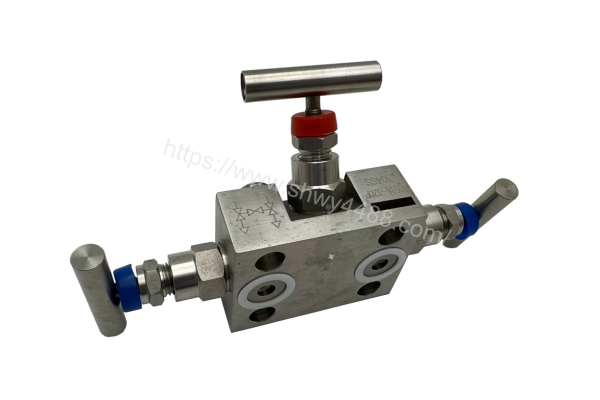
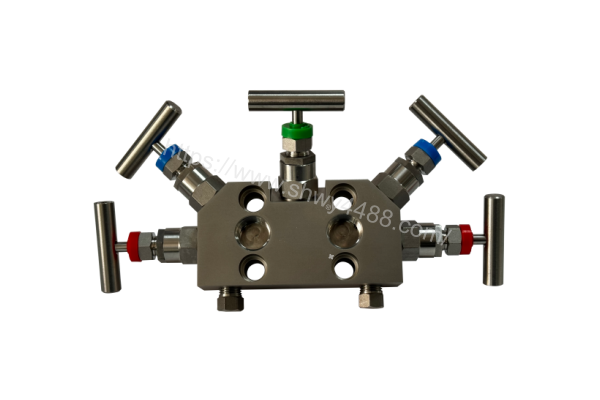
5-valve manifold builds upon the 3-valve design by adding extra valve ports on each of the H & L pressure sides. A typical five-valve manifold configuration consists of two block valves, one equalizing valve and two valves for draining or venting. In principle, the five-valve manifold covers all the functions of a three-valve manifold and achieves a qualitative leap in operational flexibility and maintenance convenience.
In practical applications, for measurements involving clean liquids or gases that are free of impurities, do not tend to condense or require frequent blowdown, 3-valve manifold can fully meets the requirements. Examples include flow measurement on compressed air pipelines or level measurement in purified water systems, where the medium is clean and stable, the impulse lines are unlikely to become blocked and very little maintenance is needed. In such cases, a 3-valve manifold is an economical and reliable choice. As long as operators strictly follow the equalizing valve procedures, the manifold can run trouble-free for a long time.
However, on process industrial sites, the medium can often be far from far from ideal. When measuring steam, dust-laden gas or sludge, condensate accumulation or particle blockage in the impulse lines can easily cause measurement lag, errors or even failure. In these situations, the two drain valves of a 5-valve manifold allow on-line draining and condensate removal without disassembling the impulse lines or shutting down the entire measurement loop. Field instrument technicians simply need to close the block valves and open the drain valves; they can then collect the waste liquid in a container or purge with steam to quickly complete cleaning. This is a major convenience in petrochemical and power installations that require high continuity of production, improving maintenance efficiency while reducing the risk of medium spray or leakage.
Whether to choose a 3-valve or 5-valve manifold for a differential pressure instrument should be decided based on the uniform requirements of project, combined with the medium condition, installation layout, and operation and maintenance strategy. Shanghai Wangyuan is a professional manufacturer specializing in instrumentation, with over 20 years of industry experience. If you have any needs or questions regarding the selection of differential pressure transmitters and valve manifolds, please feel free to contact Shanghai Wangyuan to find the most suitable measurement solution.
Post time: May-11-2026