
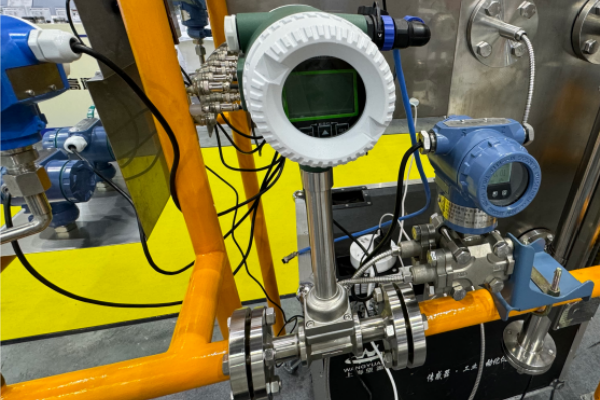
Vortex flowmeters operate based on the Kármán vortex street principle. Due to their features such as high accuracy, wide turndown ratio, and no moving parts, vortex flowmeters are widely used in steam, gas, and liquid flow measurement. However, these instruments are extremely sensitive to fluid flow conditions, and their superior performance might not be fully realized under all operating conditions. If there is a lack of in-depth understanding of the process conditions or insufficient attention to the details of the installation environment, this precision instrument can easily encounter issues such as abnormal readings, increased errors, and frequent alarms. Therefore, from model selection to installation, operational standardization at every stage is crucial to ensure the final performance of vortex flowmeter.
Model selection
Tailoring the selection to the specific application is a prerequisite for accurate measurement. The selection process must focus on the precise matching of three core elements: flow range, pipe diameter and medium characteristics, to avoid problems caused by improper selection that could necessitate subsequent modifications.
Range Matching: The actual process flow rate ought to fall within 20% to 80% of the instrument's range. If the flow rate falls below 20%, the vortex signal is weak and susceptible to being ignored due to low flow cut-off function (resulting in a flow reading of 0). If it exceeds 80%, it may go beyond the sensor's upper tolerance limit (e.g., overload damage to piezoelectric sensors).
DN Matching: The nominal diameter (DN) of ortex flowmeter should preferably match the process pipe size to effectively avoid flow disturbances caused by DN size differences. However, in situations where the process pipe is large but the actual flow rate is small (e.g., medium flow in a DN200 pipe matches the capacity of a DN100 flowmeter), it is necessary to use a flowmeter with reduced bore design after calculation to increase the fluid velocity to within the normal operating range of the vortex flowmeter.
Medium Properties
- Phase State: Vortex flowmeters can only be used to measure single-phase fluids. Avoid applications where the medium may undergo phase transition under operating condition.
- Temperature/Pressure: The medium's temperature and pressure determine the component selection (e.g., temperature rating of piezoelectric sensor) and the body pressure rating. If the conditions exceed the standard range, high-temperature or high-pressure models must be selected.
- Corrosiveness: Whether the medium corrodes the pipe material determines the material of the flowmeter body and liner (SS304/316L, Hastelloy alloy, Titanium, etc.).
- Viscosity: Vortex flowmeters are sensitive to fluid viscosity. Excessive viscosity can lead to a low Reynolds number, potentially preventing the flow from entering a turbulent state (where vortex shedding becomes unstable), thus hindering normal operation.
- Flow Velocity: The flow velocity range for a vortex flowmeter must be determined by considering the medium type (gas/liquid), medium characteristics (viscosity, density) and instrument's structure. The core principle is to ensure stable vortex generation without damaging the instrument or piping.
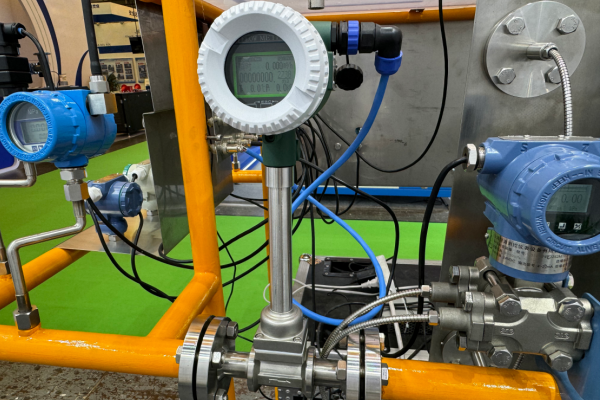
Installation
Vortex flowmeters are very sensitive to installation conditions. Ensuring straight pipe runs and eliminating interference are critical.
Straight Pipe Run: The length of straight pipe runs is the primary consideration in vortex flowmeter installation. Upstream components like elbows, valves, or pumps can generate eddies that disrupt normal flow velocity profile. Typically, a minimum upstream straight run of 15 times the pipe diameter (15D) of instrument and a downstream straight run of 5D are required. If there is a partially open control valve upstream or two elbows in different plane, the required straight run may increase to 40D or more to ensure stable flow.
Installation Direction: The arrow on the flowmeter housing must be strictly followed during installation to ensure it aligns with the fluid flow direction. When measuring liquids, the meter should be installed at a low point in the piping system to prevent gas entrapment in the measuring tube. When measuring gases, it should be installed at a high location to avoid liquid accumulation. For vertical installation with liquid medium, the flow should be upwards to ensure the pipe remains fully filled during operation.
Interference Immunity: The installation location should be kept away from strong magnetic fields and high-vibration areas (such as transformers and pump outlets). If vibration is significant, damping measures ought to be implemented, such as installing pipe fasteners at 2D up & downstream and anti-vibration pads. During installation, it is crucial to ensure the flowmeter bore aligns concentrically with the pipe's inner diameter. Gaskets must never protrude into the pipe interior, as this would cause flow disturbance and lead to measurement errors.
The advantage of vortex flowmeters lies in their applicability across various fluid types and relatively high cost-performance ratio, playing an irreplaceable role in steam, gas, and liquid measurement applications. However, it must be clearly understood that they are not a "plug-and-play" universal instrument but rather a precision device highly sensitive to fluid conditions, piping configurations, and installation environment. Many operational problems encountered with vortex flowmeters in practice can often be traced back to misjudgments during the selection phase or negligence of details during on-site installation. Therefore, when applying vortex flowmeters, a systems engineering approach should be adopted, integrating them into the overall pipeline circuit for comprehensive consideration. Paying close attention to the key points mentioned above is essential for ensuring process stability.
As an experienced instrument manufacturer and supplier, Shanghai Wangyuan has been deeply involved in the industry for decades, accumulating extensive practical field application knowledge and efficient troubleshooting capabilities. We are committed to providing customers with products featuring stable performance and reliable quality, along with professional and timely technical support. If you have any requirements regarding flowmeter selection or application, please feel free to contact us for a tailored solution.
Post time: Mar-10-2026