
Thermowell is a closed-end tube fitting that protects a temperature sensor from process pressure, flow and harsh medium. The sensor probe is inserted into the thermowell whose tip extends into the process fluid directly. Heat is conducted through the thermowell wall to the sensor which then provides a temperature reading.
This straightforward arrangement solves several problems simultaneously. It maintains process integrity and allows sensor maintenance and replacement without shutting down the process or draining the system. It protects the sensor from mechanical damage and also isolates it from high-pressure or hazardous fluids. However, the thermowell itself is then exposed to the same aggressive conditions and a improperly specified thermowell can badly fail .
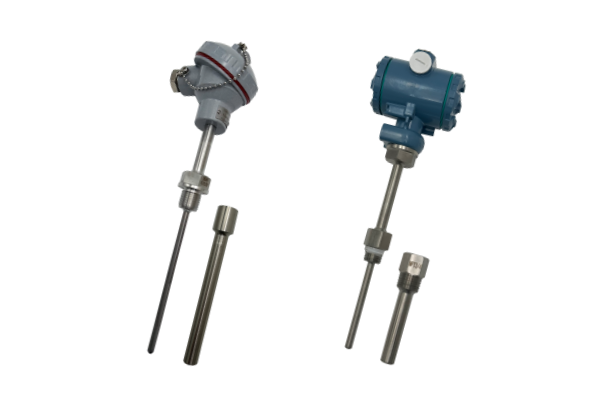
Every thermowell specification begins with a set of critical dimensions and ratings. These vital parameters determine whether the thermowell will mechanically fit, survive the process environment and deliver accurate temperature reading.
Bore Diameter
Thermowell bore diameter must match the sensor outer diameter (Common diameter of sensor probe inside thermowell is 6mm or 8mm). An oversized bore creates an excessive air gap that slows thermal response while a tight fit makes sensor insertion difficult and risks mechanical damage.
Outer Diameter
The outer diameter influences both mechanical strength and response time. A thicker thermowell wall provides greater strength and is preferred for high-velocity or high-pressure services. A thin thermowell improves thermal response but is more susceptible to vibration and mechanical failure.
Insertion Length
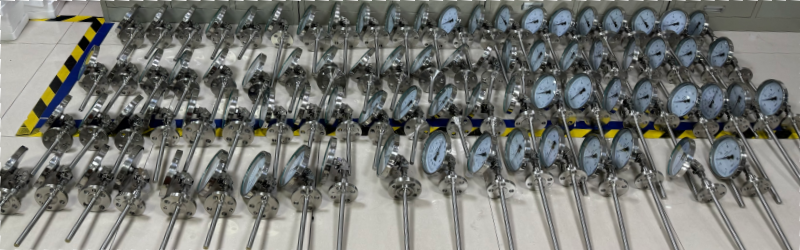
Insertion length is the distance from thermowell tip to bottom of process connection. It determines how far the thermowell projects into the process vessel. The most common mistake of sizing is a insertion length too short. If the sensor probe does not extend far enough into the fluid, the measurement would be a mix of process and cooler wall temperature, leading to measurement errors. For an accurate reading, the sensor tip should ideally be positioned at the center of the pipe or vessel, where the fluid temperature is most representative. A practical rule of thumb is to insert the thermowell tip at least one-third of the pipe inner diameter for liquid medium and no less than one-half for low-velocity fluid and gas services.
Process Connection
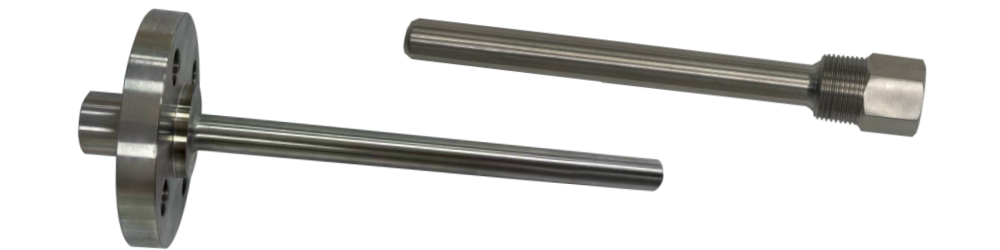
Thermowells connect to tanks and pipes through thread, flange or welded joint. Thread connection is common for low-pressure process and easy to replace. Flange connection is favorable in high-pressure, high-temperature or hazardous applications where reliable seal is essential. Welding thermowells are used in permanent installations that demand maximum structural integrity.
Pressure and Temperature Rating
The thermowell must withstand both the maximum process pressure and temperature. These ratings depend on material, wall thickness and connection type and ought to be verified against the worst-case operating scenario instead of normal conditions.
Material
Selection of thermowell material dedicates its pressure-temperature rating, chemical compatibility and fatigue resistance.
Standard stainless steel: 304 and 316 are the most widely used thermowell materials, offering good mechanical properties and broad corrosion resistance.
High-temperature materials: When standard stainless steels lose strength at elevated temperature, materials such as Inconel 600 and alundum (alumina ceramic) maintain mechanical integrity and oxidation resistance.
Corrosion-resistant alloy: For highly corrosive medium, materials such as Hastelloy C-276, Monel, Titanium and Tantalum provide superior chemical compatibility compared to stainless steel. Material selection should be based on established corrosion data for the specific process fluid, its concentration and operating temperature.
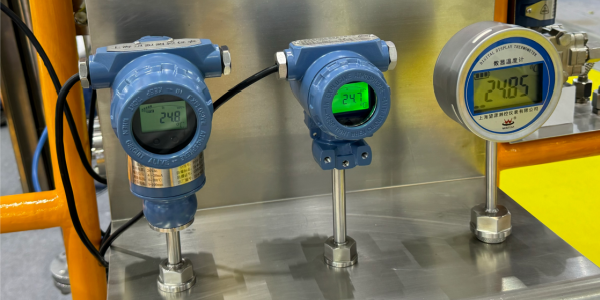
Thermowell selection and sizing are engineering decisions that directly affect measurement accuracy, process safety and long-term maintenance cost. A properly specified thermowell protects the sensor probe, react rapidly enough for the control loop and withstands the process mechanical and chemical conditions. Shanghai Wangyuan possesses more than 20 years of manufacturing experience in the instrumentation sector. For any inquiries regarding temperature sensors or transmitters with thermowell selection, our technical team is on hand to offer expert guidance and customized solutions—simply reach out to us.
Post time: Aug-14-2026