
Industrial piping and equipment are often equipped with various pressure instruments. In some cases, a question may arise: why install a pressure gauge when a pressure transmitter is already emplaced? Or even why install all three—pressure gauge, transmitter and switch together? Such a configuration may appear to be redundant duplication, but their roles in the control loop are entirely different. The pressure gauge is responsible for “making pressure visible to personnel”, the pressure transmitter for “making pressure readable by the system” and the pressure switch for “actuating when the threshold is reached”. Their functions do not overlap who represent the standard layout of three safety defense lines in industrial production: monitoring, transmission and protection.
Differences in functionality and signal form
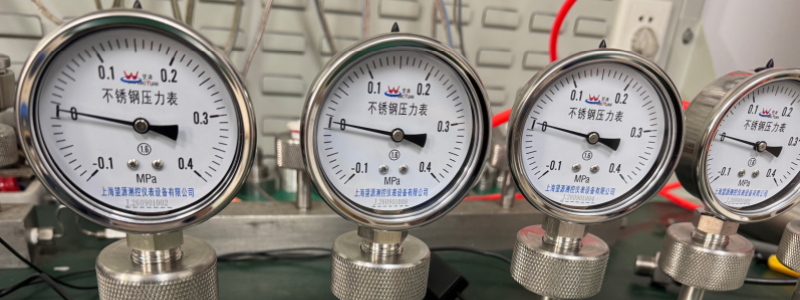
Pressure gauge is a purely instrument of local indication. It requires no external power supply throughout its operation and generates no electrical signal. In industrial settings, 2.5 and 1.6 are the most common accuracy classes for pressure gauges. The value of a pressure gauge lies in its readability during power outage—even if the control system fails completely, site personnel can still obtain the most original pressure information.
Key functions: Local real-time visual reading; purely mechanical structure with no power supply required; ready for reading immediately upon startup and readable at any time.
Working principle: Bourdon tube, diaphragm and other pressure-sensing elements undergo elastic deformation to drive pointer deflection and display real-time process pressure readings.
Output signal: No electrical signal output; local reading indication only.
Advantages: Low cost, high reliability, no power supply required, intuitive reading and fast response.
Typical applications: Used as a basic pressure reference for piping and equipment requiring on-site inspection and manual observation.
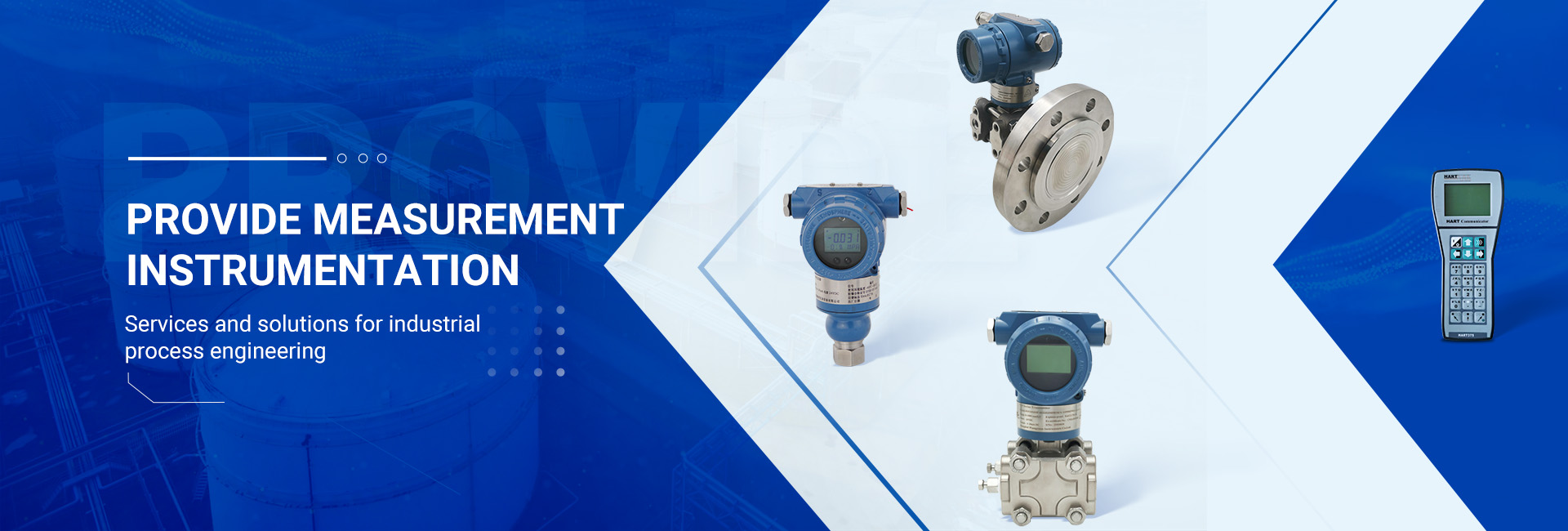
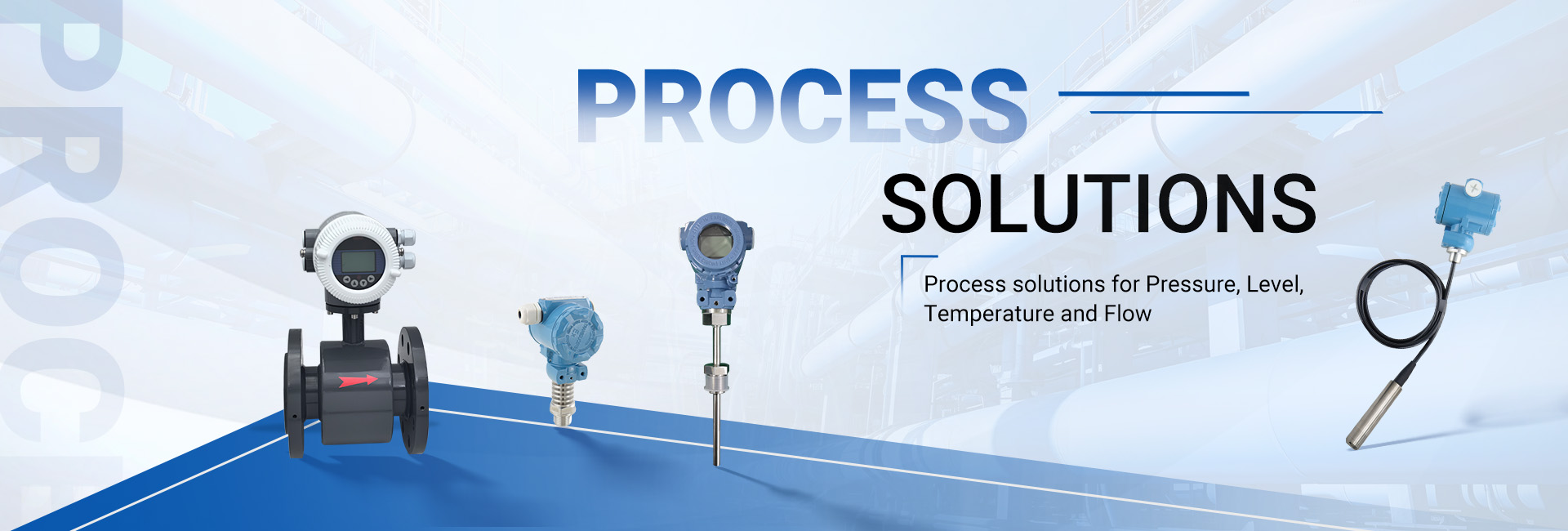
Pressure transmitter is a signal conversion instrument. It converts pressure into a standard industrial signal through piezoresistive or capacitive sensing elements. The most typical output is a 2-wire 4~20 mA current loop, on which the HART protocol can be superimposed for remote configuration and diagnostics. Unlike pressure gauge, a transmitter outputs a continuous analog quantity and its information terminal is the analog input channel of a PLC, DCS or SIS.
Key functions: Accurate pressure measurement and remote data transmission; real-time feedback of dynamic pressure changes.
Working principle: Senses pressure changes in the piping and converts them into standard 4~20 mA analog signals or digital signals.
Output signal: Continuous linear electrical signal, uploaded in real time to the industrial control system.
Advantages: Continuous analog output, high accuracy, configurable and fast dynamic response.
Typical applications: Automated production lines, central control monitoring piping and process systems requiring data retention and closed-loop pressure control.
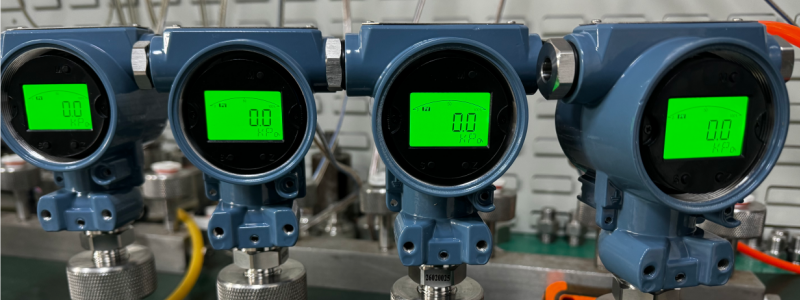
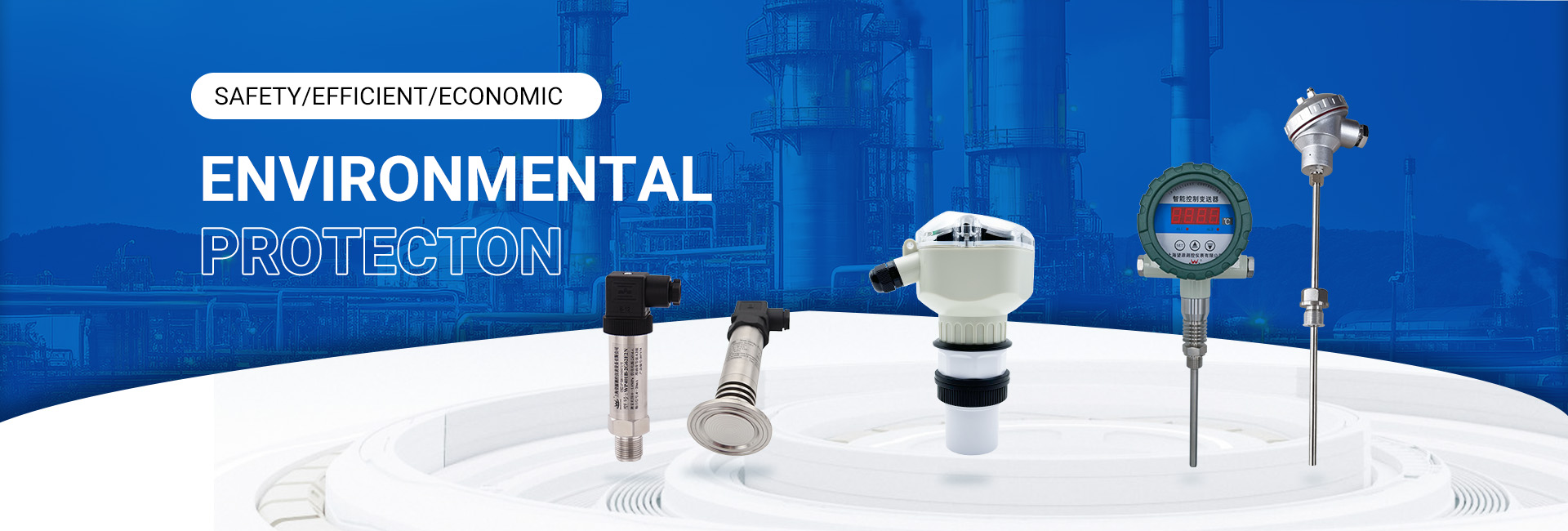
Pressure switch is a safety protection instrument. It is not responsible for pressure measurement but for threshold triggering—whether the pressure reach the set point or not. In addition, its core parameters include dead band and repeatability. Too small a dead band causes frequent contact chatter, while a dead band too large reduces protection sensitivity. The endpoint of a pressure switch is a relay, contactor or safety interlock which directly drives alarm or start/stop actions.
Key functions: Automatic actuation upon exceeding limits; high/low pressure alarm, pump start/stop and system shutdown.
Working principle: High and low pressure thresholds are preset; when pressure exceeds the set value, internal contacts open or close automatically and output a discrete signal.
Output signal: Discrete on/off signal, indicating normal/over-limit status.
Advantages: Fast response, independent interlock protection, the last line of defense for process safety.
Typical applications: Overpressure protection for high-pressure vessels and piping, explosive and hazardous media and critical equipment.
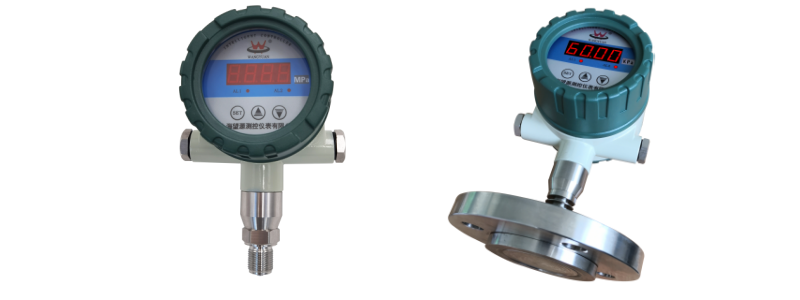
The most common instrument configuration in many process piping systems is the parallel installation of a pressure transmitter and a gauge. This is by no means simple design redundancy. The main reasons are threefold:
Without local indication, pressure transmitter data can only be viewed in the central control room or back-end system, and on-site inspectors cannot intuitively judge real-time process conditions. During equipment commissioning, piping maintenance, on-site pressure testing and troubleshooting, personnel cannot conveniently retrieve back-end data at any time; a local pressure gauge enables fast and clear reading of real-time pressure and significantly improves on-site O&M efficiency.
Industrial instruments may drift, fail or suffer signal interference during long-term operation. If the transmitter signal is abnormal, the wiring fails or data is distorted, the local pressure gauge can serve as an on-site reference to help quickly determine whether the cause is a process condition change or an instrument fault, avoiding misjudgment of process conditions and incorrect operation caused by a single instrument malfunction. The transmitter is responsible for remote monitoring, while the gauge provides local reference; the two provide mutual backup and improve data credibility.
Temporary power outages, network interruptions, or control system crashes may occur on the production site. At such times, the pressure transmitter may fail and no data is available, whereas a mechanical pressure gauge is unaffected by circuits and networks and can still display pressure normally, ensuring visibility of basic piping conditions and avoiding safety accidents caused by blind operation due to loss of pressure monitoring.
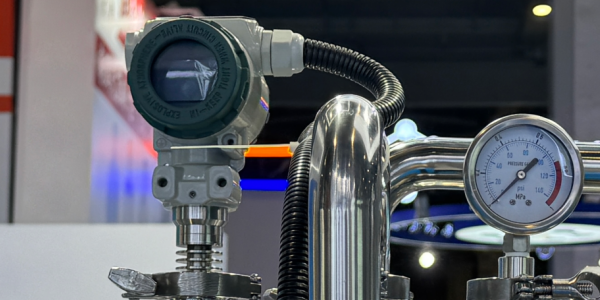
For high-risk, critical and interlock-protected process systems, a parallel configuration of pressure transmitters, local pressure gauges and pressure switches is often adopted to build a three-tier protection system:
Pressure gauge: local visual monitoring and manual inspection backup. Served as an on-site visual reference ,it is responsible for local real-time pressure display, meets the manual operation requirements of daily inspection, commissioning, maintenance, and pressure testing.
Pressure transmitter: continuous measurement and automated precision control. It is responsible for pressure data acquisition and uploading to the central control system, generating pressure curves, recording production data and participating in process closed-loop control to ensure stable and controllable production conditions and meeting the requirements of automated production, data traceability, and production compliance.
Pressure Switch: The final line of defense, independent of the control system. In many high-risk operating conditions, it is not advisable to rely on software interlocks using “transmitter + PLC” configuration due to the risks of system crashes, program failures and signal delays. The mechanical pressure switches standalone utilize hardware interlocks that are unaffected by the control system’s operational status. When pressure exceeds limits, they instantly trigger an overpressure alarm, open the relief valve, shut down the pump or initiate an emergency system shutdown, thereby preventing accidents such as explosions, leaks or equipment damage caused by overpressure.
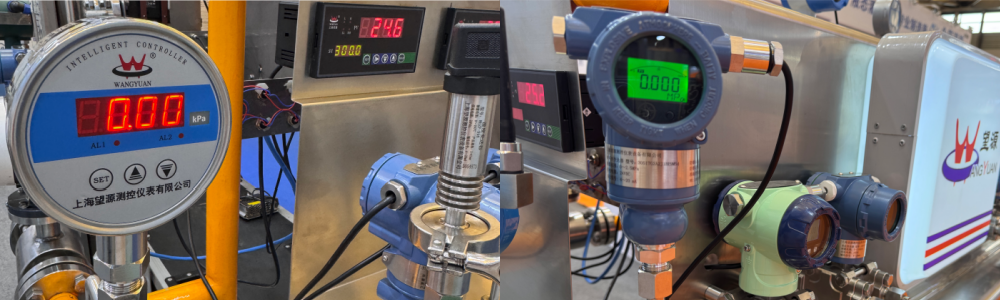
The configuration of industrial instruments is a standardized safety logic distilled from numerous engineering cases: pressure gauges ensure local visibility, pressure transmitters guarantee process controllability, and pressure switches secure safety interlock. Layered protection and mutual backup among the three constitute an important guarantee for the stable operation of industrial production. Shanghai Wangyuan has more than 20 years of industry experience and focuses on professional instrument manufacturing. If you have any requirements or questions regarding the selection and configuration of pressure instruments, please feel free to contact us for technical support and solutions.
Post time: Nov-10-2026